2026 Open Championship
Questionable Attire, on Penalties and Convenient Rulings, and A Champion Worthy of the Claret Jug,

The Case Against Looking Ridiculous
There exists an unfortunate modern belief that originality should be mistaken for style.
Golf has never subscribed to this philosophy. It has always preferred restraint over spectacle.
The course is sufficiently beautiful without competitors attempting to outshine it.
Jason Day once again demonstrated that neither he nor his sponsor possesses the necessary restraint.
Historically, Mr. Day was a steward of proper dress, presenting himself as a true professional and an example of the standard expected at the highest level of the game. In recent years, however, he has dressed as though he either lost a wager to his clothing sponsor or his sponsor has become so desperate for attention that subtlety was abandoned altogether.
Whatever the explanation, the Society does not lay the blame entirely at the feet of the sponsor.
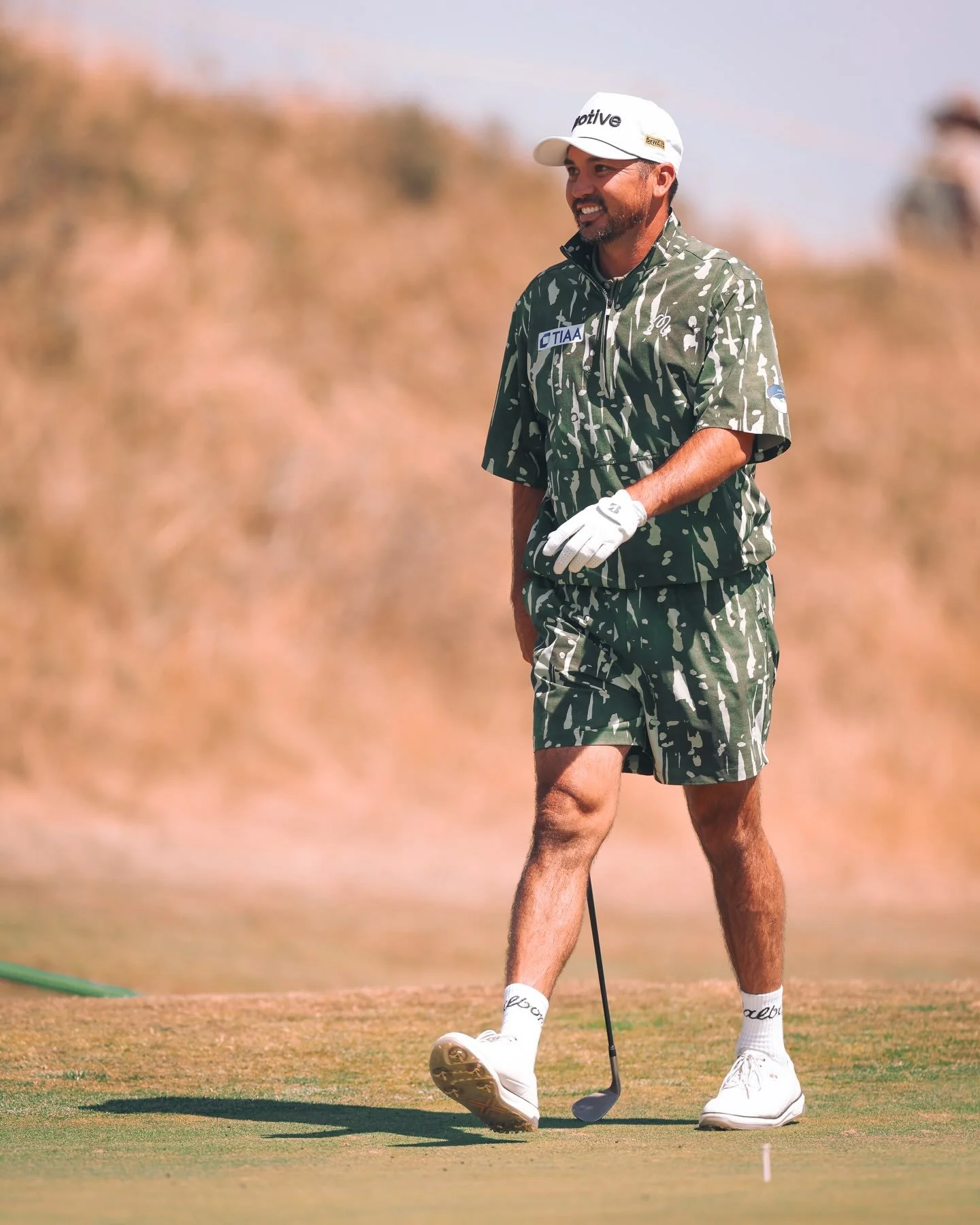
At the end of the day, Mr. Day retains the final authority over what he wears and must therefore accept the consequences of those decisions. After all, it was Mr. Day, not his sponsor, who experienced the early departure from Royal Birkdale after only two rounds.
The Society does not claim that questionable wardrobe choices automatically result in missed cuts. We merely observe that, for the second time in as many weeks, a professional who unnecessarily tested the boundaries of propriety received remarkably swift judgment from the Golf Gods.
The mind is better occupied calculating the wind off the Southport coast than stuck wondering whether one's attire resembles upholstery.
The Lie Continues to be Sacred
Bryson DeChambeau's championship effectively ended before the weekend truly began. The two-stroke penalty he received on Friday for improving the area of his intended swing will be debated for years by rules experts. Most will focus on what occurred immediately before he played his stroke. The Society's concerns begin considerably earlier.
Before ever addressing the golf ball, Mr. DeChambeau embarked upon an elaborate inspection of the surrounding terrain that, to the outside observer, could only be described as interpretive dance. Feet were shuffled. Grass was flattened. Angles were explored as Bryson contemplated the shot he wished to play.
But Order VII is unambiguous: The lie is sacred. Other than on the tee, the ball selects its resting place until holed.
The proper response upon finding one's golf ball is remarkably simple: assess the situation, select a club, and accept your fate. Golf becomes a lesson in landscaping only after the stroke has been played; after all Order V requires that the course be restored.
The aftermath provided the sort of content fodder golf writers, podcasters, and influencers could only dream of.
Rory McIlroy offered his opinion with characteristic directness, dismantling Bryson's actions in terms that left little room for interpretation. Most of his fellow competitors preferred the safety of neutrality.
Scottie Scheffler occupied the middle ground. Following the penalty, the World No. 1 remarked that he had "a lot to say," but, in the Society's view, wisely chose not to say it. Such restraint is understandable, and by us endorsed, while a major championship remains in progress. Controversy is a heavy companion to carry over 72 holes.
Golf, however, possesses an exceptional sense of timing.
Standing on the 17th tee on Sunday, needing at least two closing birdies to have any chance of capturing the Claret Jug, Scheffler launched his second shot so far left that it disappeared entirely. The golf ball was never found.
Tournament officials concluded that it had likely come to rest in or around a temporary hospitality structure, allowing Scheffler relief under the Temporary Immovable Structure Local Rule.
The Society holds the Royal & Ancient in the highest regard. In this instance, however, we respectfully disagree.
A golf ball that cannot be found is, by every meaningful definition, a lost golf ball. The Rules allow precisely three minutes to locate it. They do not permit competitors to substitute confidence in a ball's location for confirmation of its discovery.
Without the golf ball, there can be no certainty that it came to rest where relief was available. Without certainty, relief cannot exist. The proper procedure was stroke and distance. Instead of putting for birdie, Mr. Scheffler should have returned to replay his second shot, playing his fourth from that position.
It is a relief, perhaps, the Golf Gods reached the same conclusion.
Despite receiving relief, Scottie’s birdie on the 17th did not produce the ending he required. Another birdie on the 18th would have tied clubhouse leader Cam Young.
It never came.
Only after the championship concluded did Scheffler offer his opinion on the Bryson incident, stating that DeChambeau is not a cheat and would never intentionally violate the Rules. It is a generous sentiment and likely a correct one. It is also an interesting perspective from a man who benefited from a free drop without anyone ever locating his golf ball.
The irony of Golf never ceases to captivate the Society.
The Champion Golf Deserves
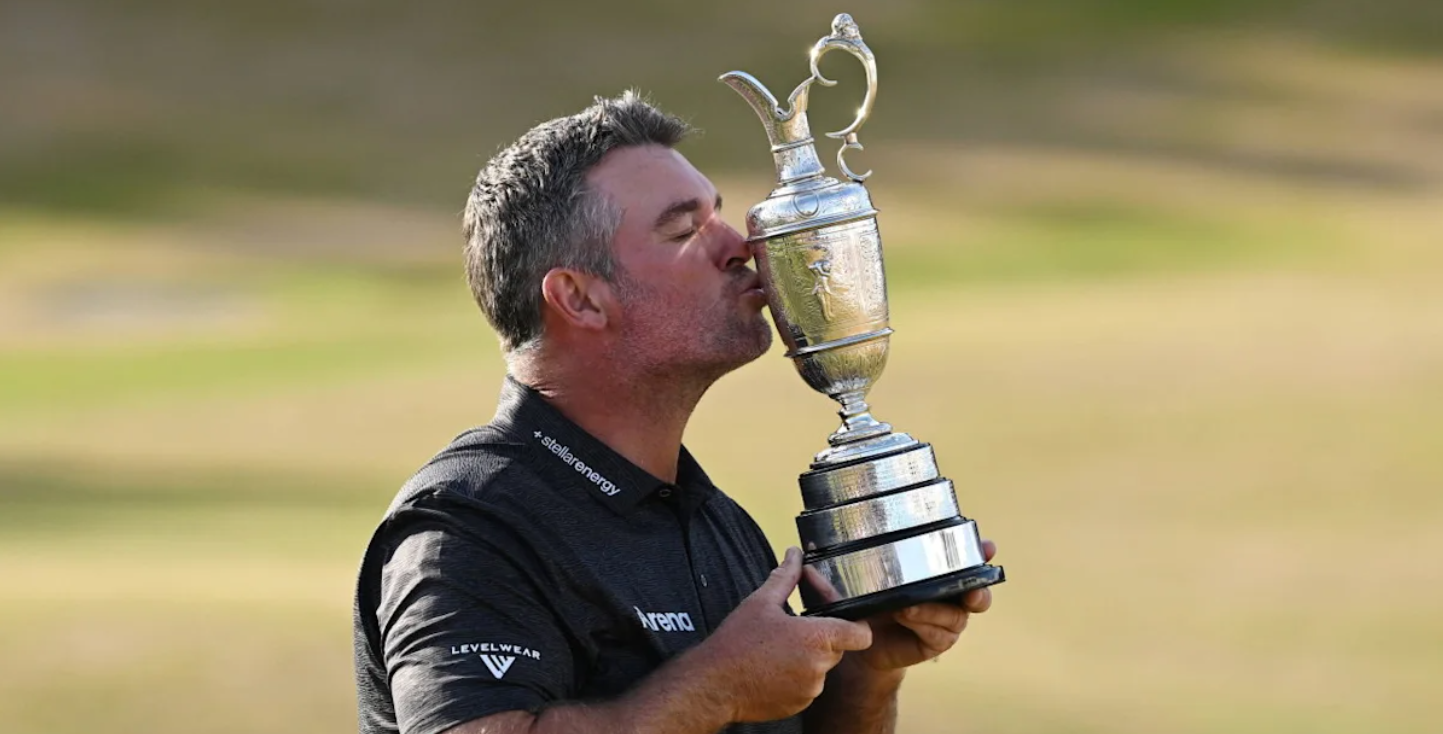
While others debated penalties and searched their wardrobes in vain for appropriate attire, Ryan Fox simply played Golf.
His closing stretch will rightly be remembered among the finest ever produced in pursuit of the Claret Jug.
Birdies on four of his final six holes, capped most impressively by a masterpiece on the most difficult 18th with the championship hanging in the balance.
Cam Young's magnificent morning 64 posted the clubhouse lead at nine under and asked the field a difficult question. Ryan Fox was the only player prepared to provide the answer as the afternoon winds strengthened.
Scottie Scheffler gave chase but ultimately came up short. Sam Burns never truly threatened. Si Woo Kim briefly touched the lead before escorting himself from contention on the inward nine. Hometown favorite Tommy Fleetwood simply began the day too far behind to mount a genuine assault.
Ryan Fox, ever the competitor, saw opportunity where others saw pressure. Afterwards, he described it as the finest golf of his life.
The Society is inclined to agree.
He earned every inch of his victory, accepted every challenge and every unfortunate bounce the course presented, and when the championship demanded courage, he stood upon the 18th tee and produced three strokes worthy of the title they secured.
Ryan Fox, a devoted practitioner of Order IV, embodies the qualities the Society believes should define the Champion Golfer of the Year. He understands not only how Golf ought to be played, but also how long it ought to take.
The Claret Jug could hardly have found a more suitable custodian.
Long may he reign.